
Listen Now


In this episode of the Titanium Economy Podcast, Chris Bergey, EVP of the Edge AI Business Unit at Arm, talks to Akshay Sethi, President & Head of Commercial Excellence at Ayna. Chris breaks down how Arm became foundational to modern computing, from smartphones to hyperscale AI infrastructure, and shares insights on Arm's AI strategy, the rise of inference workloads, the transition to Arm v9, and why ecosystem scale remains its biggest competitive advantage. The conversation also covers edge AI, cloud computing, industrial automation, and semiconductors' next wave of innovation. A must-watch for anyone following AI, semiconductors, and the future of computing.
In this episode
- Arm's Business Model, Growth Architecture, and the V9 Revolution Arm's three-decade IP licensing model has compounded into dominant semiconductor infrastructure spanning smartphones, data centers, and automotive. The V9 architecture, nearly a decade in development, has restructured royalty economics while embedding AI acceleration at the silicon level.
- Inference Over Training: Where AI Value Is Monetized at Scale Chris Bergey argues that inference workloads represent a far larger commercial opportunity than model training. The rise of agentic AI, with parallel inference chains running simultaneously, further accelerates the primacy of edge and distributed compute over centralized training clusters.
- Arm's Competitive Positioning: Enabling and Competing Across the AI Stack Arm navigates a nuanced co-opetition dynamic, powering Nvidia Blackwell GPUs while architecting platforms that reduce dependence on x86 incumbents. Arm's value accrues regardless of which application layer wins, as it provides the foundational compute substrate across competing paradigms.
- Leadership Philosophy: Intellectual Honesty, Domain Transitions, and the Cloud Bet Bergey's career across AMD, Western Digital, Broadcom, and Arm reflects a framework centered on truth-seeking, customer discipline, and asymmetric bets — including Arm's all-in commitment to cloud-native Neoverse infrastructure over legacy OEM relationships.
- Edge AI in Industrial Markets and the Future of Physical Actuation Arm's approach to fragmented industrial markets prioritizes composable building blocks over unit-volume scale, enabling AI-driven orchestration where standards bodies previously failed. Bergey's forward thesis centers on physical actuation — robotic systems with high degrees of freedom — as the next major inflection point for semiconductor demand.
About our guest
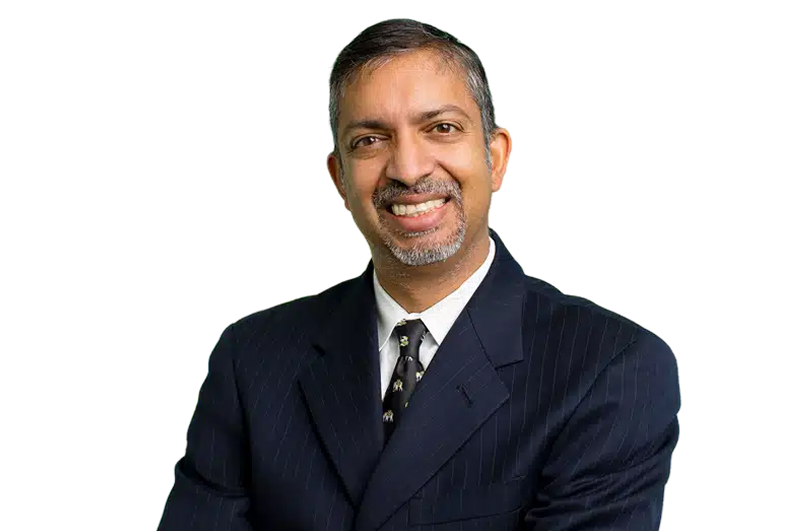
Chris Bergey is leading the Edge AI business unit at Arm Holdings, a semiconductor IP company. With over 30 years of industry experience, he has held senior leadership roles at AMD, Western Digital, SanDisk, and Broadcom, as well as across multiple divisions within Arm, including infrastructure, client computing, and now Edge AI. A regular keynote presence at Mobile World Congress, CES, Embedded World, and Computex, Bergey is widely regarded as a leading voice on edge inference, AI silicon strategy, and heterogeneous computing.